博文

Advantage of centrifugal casting

Advantage: 1.There is almost no metal consumption at inject system and gating system, so production rate improved much. 2.There is no core when produce hollow castings so greatly improve the metal filling capacity, lower the ratio of wall thickness to length or diameter and simplify the process of sleeve and pipe production. 3.High density, less of defects like pores and slag, high mechanical property. Easy to manufacture cylinder or sleeve type composite metal castings such as steel back copper sleeve, bimetallic roller, thin wall castings.
Features of centrifugal casting

1 Castings can be made in almost any length, thickness and diameter. 2 Different wall thicknesses can be produced from the same size mold. 3 Resistant to atmospheric corrosion, a typical situation with pipes. 4 Mechanical properties of centrifugal castings are excellent. 5 Only cylindrical shapes can be produced with this process. 

Centrifugal casting process

molten metal is poured into a hollow cylindrical mold spinning about a horizontal axis. The centrifugal force distributes the molten metal and shapes it into a tubular/cylindrical forms. The high  forces involved in this casting method means that the less dense materials including impurities are forced into the center where they can be subsequently removed and gas related defects and shrinkage porosity are reduced thus parts made from centrifugal casting exhibit denser, closer grained structure with improved physical qualities such as tensile strength, yield strength, elongation and uniformity.

TEST IN DA TONG

图片
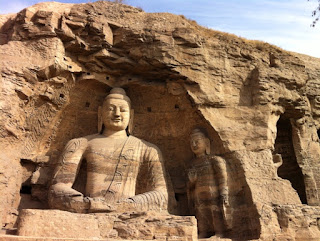
Test low pressure die casting machine in shanxi province datong city .The problem is pressuring curves fluctuation.   Yungang Grottoes is here. After finishing work I came here to have a look. It is 1500-year-old . in 2001 , unesco added it on the list of world heritage.

What is Centrifugal Casting?

Centrifugal casting is a process that delivers castings of very high material soundness, and thus is the technology of choice for applications like jet engine compressor cases, petrochemical furnace tubes, many military products, and other high-reliability applications. In the centrifugal casting process, molten metal is poured into a spinning die. The die can be spinning either on a vertical or horizontal axis depending on the configuration of the desired part. Ring and cylinder type shapes are cast vertically; tubular shapes are made with the horizontal centrifugal process. Either process may be used to produce multiple parts from a single casting.  External structures and shaping can be cast in place to significantly reduce post-processing including machining or fabrication.   Because of the high g-forces applied to the molten metal in the spinning die, less dense material, including impurities, “floats” to the I.D. where it is subsequently removed by ma...

Centrifugal casting – When to use it:

Symmetrical parts that can rotate on an axis Static casting material properties are inadequate Centerline shrink is an issue using other casting processes Limited I.D. features Large parts, up to 135,000 lbs./61,235 kg or more Net-shaping: Some tooling cost is often justifiable when significant finishing is required

What is Sand Casting?

Sand casting as a technology has been around for millennia, and is selected as a preferred method to produce shaped parts that weigh less than a pound, to very large parts. The process is versatile and cost effective, even for low volume runs because of tooling cost. Nearly any part configuration that can be made in another material can be reduced to a pattern and created as a sand casting.